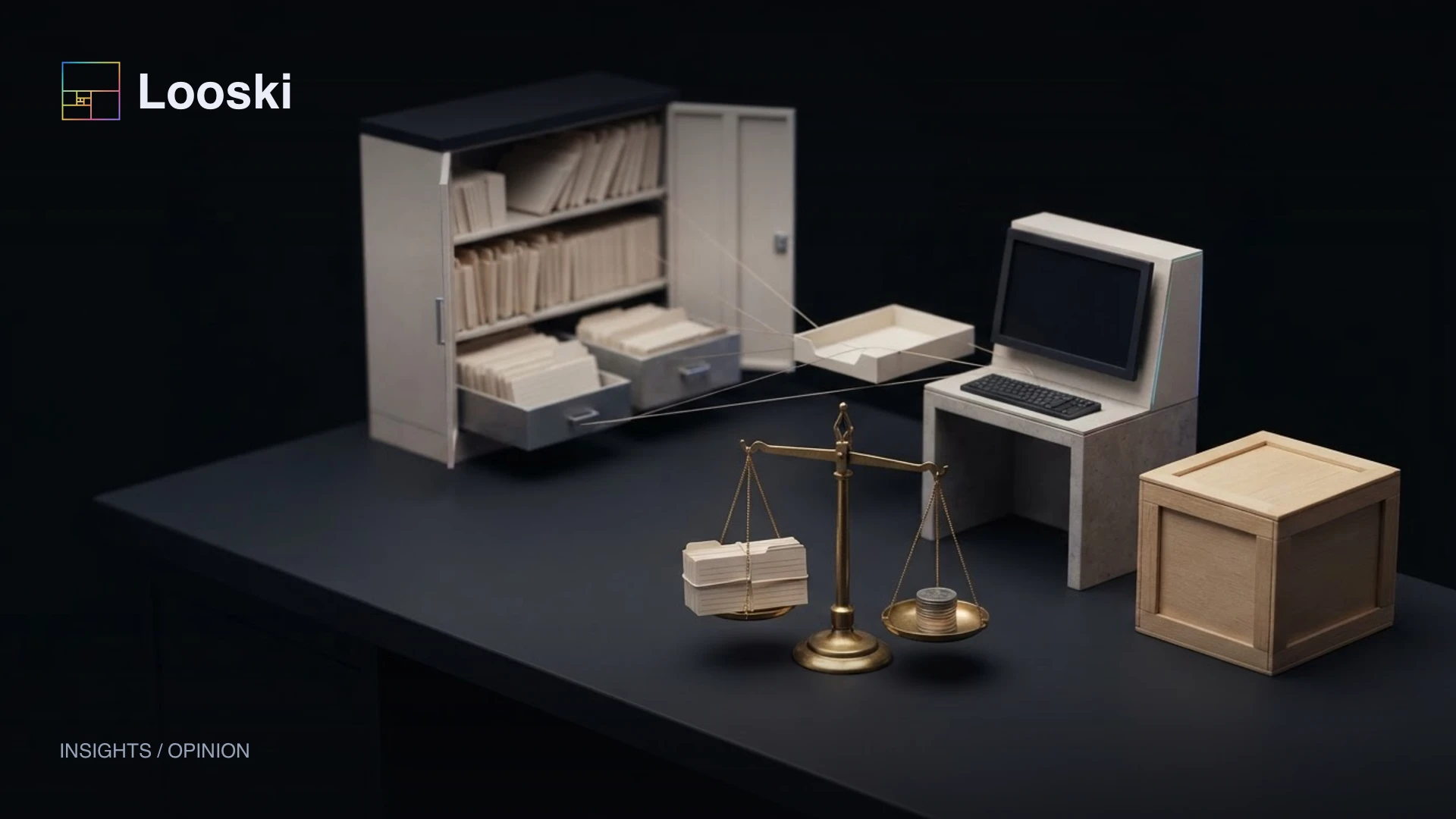
In August, Google won an unusual bankruptcy auction. It bid $10 million for the internal records of Spirit Airlines, which stopped flying in May. The lot includes roughly 100 million emails, 500 million Microsoft Teams items, hundreds of code repositories and 175,658 employee records going back to 1986 (Axios; Bloomberg Law). Mercor, a data vendor to AI labs, was the backup bidder at $7.5 million. After the auction closed, another vendor, micro1, offered $12.5 million (Fortune). The flight attendants' union has objected on privacy grounds, and the court is expected to take up the sale again on September 30.
Divide the winning bid by the messages and you get less than two cents per message, by our arithmetic.
The market has moved on from bankrupt airlines. In April, Forbes reported that failed startups were selling old Slack workspaces, inboxes and Jira boards to AI buyers. One former CEO said she sold 13 years of records for hundreds of thousands of dollars (Forbes). Now the pitch is aimed at companies that are still operating. micro1 advertises payouts from $100,000 to more than $1 million to firms with 30 or more employees (micro1), and those offers have been circulating on founders' social feeds this month.
If you run a business, you may get one of these emails. Here is how I would read it.
What AI companies are buying when they buy your data
Your company's words are not the main attraction. The buyers want to see how the work actually moves.
The data mostly ends up in what the industry calls reinforcement-learning environments. These are simulated workplaces, with copies of Slack, email, a CRM and a ticket tracker, where an AI agent is given a task, attempts it, and is scored (Epoch AI). What makes a real archive valuable is its connections: a customer complaint becomes a ticket, the ticket starts a Slack argument, the argument produces a code change, and the change ships. The Spirit sale terms spell this out. Any anonymization has to keep the links between people, messages and records intact (PPC Land).
The people building these systems do not hide the goal. The co-founder of Mechanize, which builds these simulated offices, has said the aim is to fully automate work, starting with white-collar jobs (The Decoder). An executive at data vendor Surge AI told TIME that Google's Spirit bid only makes sense if you believe AI agents will generalize across the economy (TIME).
The candidates for automation are the kind of work your company does.
How much AI companies pay for company data
The headline figures sit at the top of the range. SimpleClosure, the wind-down firm that brokered many of the early dead-startup deals, advertised $10,000 to $100,000 per company. Its own totals, about $1 million across nearly 100 deals, work out to an average near $10,000 (Upstarts Media). Those early prices came from companies that were shutting down and would otherwise have deleted the archive. They were right to take what they could get. But their prices are now the reference point for offers to healthy firms.
Compare the offer with what the data is worth to the buyer. An industry source told Epoch AI that a high-quality replica of a complex app like Slack costs around $300,000 to build (Epoch AI). So a six-figure offer for your company's records costs a lab about the same as one simulated app. Epoch also reports that exclusive deals cost roughly four to five times more than non-exclusive ones, which means the same material is routinely sold to more than one lab. micro1 reports gross margins of 80 to 90 percent on its off-the-shelf datasets (TechCrunch). Most of the value in this market goes to the middlemen, not the sellers.
The payment also comes once. When Reddit licensed its content to Google, the deal was reported at about $60 million a year and could be renegotiated at renewal (Fortune). Data licenses for AI training commonly grant permanent rights to any model trained on the data (Terms.Law). You cannot take your records back out of a model once it has learned from them.
Why operating companies are saying no
The most useful argument against selling comes from a buyer. In 2025, Mercor's CEO explained why his company pays industry experts up to $200 an hour to produce training material: incumbents do not want to hand over data that would let models automate their own value chains, so labs hire former insiders instead (TechCrunch via Yahoo). OpenAI, for its part, does not train on its business customers' data by default (OpenAI). The companies closest to the labs have looked at this trade and said no, and now the offers are going to smaller firms.
If the license is non-exclusive, your workflows could end up training agents sold to your competitors, or to an AI-native newcomer entering your market. What brokers value most is also what you should guard most: customer conversations, support history, pricing logic, and the detailed record of how your team makes decisions (Upstarts Media).
Is it legal to sell your company's Slack and email?
Not everything in your workspace is yours to sell. A typical company's Slack and inbox contain more than the company's own business. They also hold employees' personal information, customer data you process under contract, and material you received under NDA. Under Europe's GDPR, a vendor that reuses client data for its own purposes becomes legally responsible for that processing as if the data were its own (GDPR Art. 28). California's privacy law has covered employee and business-contact data since 2023, and it treats any disclosure for money as a "sale" (Cal. Civ. Code § 1798.140). Call recordings carry the most risk. A federal court let a California wiretap claim proceed against Google because its contact-center AI could use businesses' call recordings for training (Goodwin).
Anonymization protects less than the brokers' promises suggest. In February, researchers showed that AI agents could link pseudonymous online writing to real identities, finding 68 percent of targets with 90 percent precision (arXiv). In January, a researcher re-identified 6 of 24 participants in an interview dataset that Anthropic had released as anonymized (arXiv). A company Slack is close to a worst case: a known group of a few dozen people, with job titles, dates, projects and writing styles that can be matched against LinkedIn. As privacy advocate Marc Rotenberg put it, "It's not generic data. It's identifiable people." (Gizmodo)
No regulator or court has yet acted against a sale like this. That means the risk is untested, not that it is absent, and it falls on the seller. A dissolved startup has nothing left for a plaintiff to collect. An operating company does. None of this is legal advice; talk to counsel before you share a sample, let alone sign.
When selling company data can make sense
The other side has real arguments.
- Archives lose value over time. Tools change, and old records become less useful.
- Much of what matters isn't written down. In a Harvard and MIT survey, workers said about 40 percent of what they need to know for their jobs does not appear in any company record (Cullen, Li & Li).
- Some knowledge is leaking anyway. Atlassian now trains its own AI on customers' Jira and Confluence data by default, and only Enterprise customers can fully opt out (The Register). Former employees are being paid to reconstruct what they know.
- For a company that is shutting down, a sale can be sensible salvage for its creditors.
Those points justify a narrow sale: the records of a discontinued product line, containing no customer data, recordings or EU exposure, with tight contract terms. They don't justify selling a live company's working memory.
What to do instead of selling your data
Read the offer as a valuation. The most useful thing in one of these emails is the fact that it was sent. Someone with a great deal of information about where AI is heading has decided that your records are worth paying for, because they show how your kind of work gets done. That makes them worth more to you than to anyone else, and their value will grow as AI agents get better at using them.
Many small and mid-sized businesses have not yet put that asset to work. The same records a lab would pay for can power search over your own history, drafting grounded in how your team actually works, and workflows that take routine work off people's desks. None of that requires shipping a copy to a broker.
A disclosure: Looski builds this kind of system, and we deploy it on hardware our clients own. That is our business, so weigh the argument with that in mind. But you do not need us to act on it. Whoever you work with, the order of operations is the same: put your own archive to work first, and never sell something you haven't yet learned to value.
If you sell, negotiate these terms
If you do decide to sell, negotiate like the buyers do:
- Define each permitted use and name the models it covers.
- Prohibit use in products that compete with you, and limit onward transfer to named recipients.
- Price exclusivity separately.
- Carve out HR, customer and pricing data.
- Require independent de-identification with audits, a contractual ban on re-identification, and destruction of the raw files.
- Check your privacy notices, customer contracts and platform terms before any data leaves the building.
The employees whose work is being sold
One more party is missing from these deals: the people who wrote the messages. Spirit's flight attendants' union did not ask the court to block the sale. It asked that identifying information about its members be removed, and pointed out that the workers had still not been paid their accrued leave (Fortune). Economists Cullen, Li and Li argue that when work records train AI, employees' know-how turns from labor a firm rents into capital the firm owns (Cullen, Li & Li). How that plays out will affect every workplace, not just the ones selling.
The first market price for a company's collective know-how is being set right now, mostly by sellers with no other options. If you still have options, don't accept their price.
Frequently asked questions
Should I sell my company's data to AI companies?
For most operating businesses, no. The payment is usually one-time, rights to trained models are typically permanent, non-exclusive data can be resold to several labs, and the legal risk stays with the seller. A narrow sale of records with no customer data, such as a discontinued product line's archive, can make sense with tight contract terms.
How much do AI companies pay for company data?
Reported prices range widely. SimpleClosure's first ~100 dead-startup deals averaged roughly $10,000 each. One defunct company's CEO reported hundreds of thousands of dollars for 13 years of records. micro1 advertises $100,000 to more than $1 million to firms with 30 or more employees. Google bid $10 million for bankrupt Spirit Airlines' records, which is under two cents per message.
What do AI labs use company Slack and email data for?
Mostly to build reinforcement-learning environments: simulated workplaces with copies of tools like Slack, email, CRMs and ticket trackers, where AI agents practice multi-step office tasks and are scored. Buyers value the links between records, such as a ticket that leads to a Slack thread, a code change and a deploy. Real work products are also used for evaluations.
Is it legal to sell my company's Slack messages and emails?
It depends on what the archive contains and where you operate, and the question is largely untested. Customer data you process under contract, material under NDA, call recordings, employee data covered by California's privacy law, and personal data under GDPR all create exposure for the seller. No regulator or court has yet acted against such a sale. Get legal advice before sharing any sample.
Can anonymized company data be re-identified?
Often, yes. A February 2026 study showed AI agents linking pseudonymous writing to real identities with 68% recall at 90% precision, and a researcher re-identified 6 of 24 participants in an interview dataset released as anonymized. A company Slack, with a known roster, roles, dates and writing styles, is especially exposed.
Who is buying company data for AI training?
Google is the only frontier lab publicly confirmed as a direct buyer, through the Spirit Airlines auction. Most deals run through data vendors and brokers such as micro1, Mercor, Turing and SimpleClosure, which resell to AI labs under confidentiality agreements. OpenAI and Anthropic are widely reported as end buyers, but neither has confirmed buying company archives.
What should I do with my company's data instead of selling it?
Put it to work for your own team first: search over your own history, drafting grounded in how your team works, and workflows that take routine tasks off people's desks. If you still sell, define permitted uses, bar competing uses and onward transfer, price exclusivity separately, carve out HR, customer and pricing data, and require audited de-identification.
Sources & further reading
- Axios: Google wins bankrupt Spirit Airlines' data
- Bloomberg Law: Spirit hasn't fixed privacy issue in Google data bid, union says
- Fortune: micro1 tries to beat Google's bid for Spirit Airlines data
- Forbes: AI's new training data: your old work Slacks and emails
- micro1: Data Partnerships
- Epoch AI: An FAQ on reinforcement learning environments
- PPC Land: Google wins bankrupt Spirit Airlines data for $10 million
- The Decoder: Mechanize is building digital offices to train AI agents
- TIME: Google's Spirit Airlines data bid and AI training
- Upstarts Media: What fetches top dollar on the dead startup data marketplace?
- TechCrunch: micro1 reaches $500M gross run rate
- Fortune: Reddit's $60M deal with Google to train AI on posts
- Terms.Law: AI training data licensing, what a usable agreement looks like
- TechCrunch: Why AI labs pay Mercor for expert data
- OpenAI: Enterprise privacy
- GDPR Article 28: Processor
- California Civil Code § 1798.140 (CCPA definitions)
- Goodwin: AI voice products subject to California invasion-of-privacy claims
- Large-scale online deanonymization with LLMs (arXiv 2602.16800)
- Agentic LLMs as powerful deanonymizers: re-identification of participants in the Anthropic Interviewer dataset (arXiv 2601.05918)
- Gizmodo: Failed companies are selling old Slack chats and email archives to train AI
- Cullen, Li & Li: Labor as capital
- The Register: Atlassian to train AI on user data
- Fortune: Flight attendant union on Google and Spirit Airlines data